
Imagine you have opened a beautiful shop on a busy street. You have great products, but the windows are covered in dust, the sign is misspelled, and the door is locked. No one will come inside, right? Your website works the same way. In the digital world of 2026, having a website isn’t enough; you need to make sure Google and your visitors can understand it, like it, and trust it. This is where optimization comes in.
Many website owners focus too much on getting links from other sites (which is called off-page SEO), but they forget the foundation. If your own “house” isn’t in order, outside recommendations won’t help much. To truly succeed and appear at the top of Google, you need to fix what is actually on your website. This includes the text, the images, the speed, and the code behind the scenes.
If you are struggling to get visitors, it is likely because your site isn’t speaking Google’s language. This guide will walk you through everything you need to know about fixing your site to rank higher. We will explore how professional on page SEO services can transform your digital presence from a dusty shop into a thriving business hub.
What Is On-Page SEO?
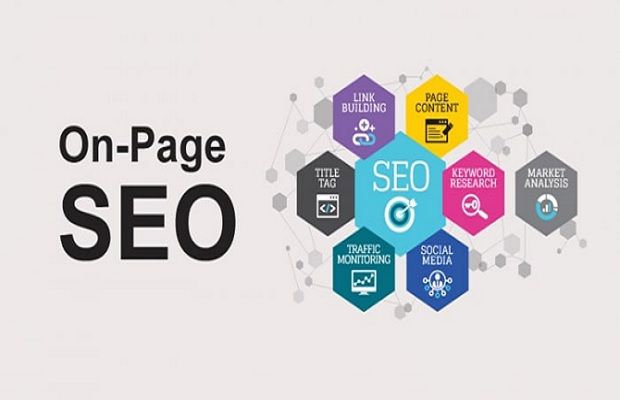
On-Page SEO (Search Engine Optimization) is the process of improving individual web pages so they rank higher on Google and earn more relevant traffic. Unlike off-page SEO, which involves external signals like backlinks, on-page SEO refers to the content and HTML source code of a page that can be optimized.
Think of it as cleaning and organizing your room so you can find everything easily. When you practice good on-page optimization, you are organizing your website so search engines like Google can easily understand what your content is about.
In 2026, this has become even more important. Google’s “robots” are smarter than ever. They don’t just look for repeated words; they look for meaning, helpfulness, and a great user experience. If your page loads slowly, has confusing text, or looks bad on a mobile phone, Google will push you down the list. On-Page SEO fixes these issues directly. It puts you in control of your own rankings by making sure every element on your site is working hard to please both the search engine and the human visitor.
Why Professional Help Matters
You might be thinking, “Can’t I just do this myself?” While you can certainly learn the basics, the world of SEO changes very fast. What worked five years ago might actually hurt your website today. This is why many business owners choose to hire experts. It saves time and ensures that mistakes aren’t made.
Expert providers stay updated with the latest Google rules. For example, Google now cares deeply about “E-E-A-T,” which stands for Experience, Expertise, Authoritativeness, and Trustworthiness. A professional knows exactly how to showcase these qualities on your pages. They know how to look at your website’s data and spot hidden problems that a regular person might miss.
Investing in high-quality on page SEO services is like hiring a master carpenter to build your house instead of trying to build it yourself with just a hammer. You get a solid structure that lasts for years. Professionals use advanced tools to scan your website, identifying broken links, slow pages, and missing information that could be costing you customers every single day.
Smart Keyword Research in 2026
Keywords are the words and phrases that people type into Google when they are looking for something. In the past, people used to stuff their articles with the same word over and over again. This is called “keyword stuffing,” and in 2026, it is a very bad idea. Google will punish your site for doing this.
Today, keyword research is about “User Intent.” This means understanding why someone is searching for a phrase. Are they looking to buy something? Are they looking for information? Or are they trying to find a specific website?
For example, if someone searches for “best running shoes,” they probably want to read reviews. If they search “buy Nike running shoes size 10,” they are ready to purchase. Your content needs to match this intent. Instead of just repeating a keyword, you should use synonyms (words that mean the same thing) and related terms. This is called Semantic SEO. It helps Google understand the full context of your page. A good strategy involves finding “long-tail keywords“ longer, more specific phrases that have less competition but bring in visitors who are ready to take action.
Content Optimization: Quality is King
There is a saying in the marketing world: “Content is King.” This is truer now than ever before. You cannot rank well if your content is thin, boring, or unhelpful. Google wants to show its users the best possible answer to their questions.
Your articles and pages should be written for humans first, and search engines second. This means using short paragraphs, bullet points, and simple language, just like this article! You should aim to cover a topic completely so the reader doesn’t have to go to another website to find more answers.
When optimizing content, you must also consider freshness. Information from 2020 is likely outdated. You need to update your facts and figures to the current year, 2026. Furthermore, professionals who provide on page SEO services will analyze your top competitors to see what they are writing about, and then help you write something even better. This is called the “Skyscraper Technique”,finding good content and building something taller and more impressive on top of it.
Title Tags and Meta Descriptions
Imagine you are in a library looking for a book. You look at the spine of the book (the Title) and the summary on the back (the Meta Description). These two things determine whether you check the book out or put it back on the shelf.
On Google, the Title Tag is the blue link that people click on. It is the most important piece of information for search engines. It must be catchy, include your main topic, and be the right length so it doesn’t get cut off.
The Meta Description is the short paragraph under the blue link. While it doesn’t directly help you rank higher, it is crucial for getting people to click. If your description is boring or doesn’t match what the user is looking for, they will skip your site. A high “Click-Through Rate” (CTR) sends a positive signal to Google that your site is popular and relevant. Writing these requires a mix of psychology and marketing skills to convince the user that your page has exactly what they need.
Image Optimization and Alt Text
Websites in 2026 are very visual. We use high-quality photos, infographics, and videos to keep people engaged. However, big images can slow down your website, and Google cannot “see” images the way humans do.
First, you must ensure your images load fast. This involves compressing them and using modern formats like WebP. A slow website is the number one reason visitors leave. If your page takes more than 3 seconds to load, you have likely lost a potential customer.
Second, you need to help Google understand your images. This is done using “Alt Text” (Alternative Text). This is a short description of the image hidden in the code. It helps visually impaired people using screen readers, and it tells Google what the image is about. For example, instead of naming an image “IMG_1234.jpg,” you should name it “red-sports-car-side-view.jpg.” Proper image handling is a standard part of comprehensive on page SEO services, ensuring your visual content helps you rank rather than slowing you down.
Internal Linking: Connecting the Dots
Internal linking is the practice of linking one page on your website to another page on your website. Think of your website like a spiderweb. The more connections there are, the stronger the web is.
Internal links do three important things:
- They help Google find new pages: When Google’s robots visit your home page, they follow links to find your other articles.
- They keep visitors on your site: If you link to related topics, readers will click through and stay longer.
- They spread authority: If you have one very popular page, linking from that page to a newer page helps pass some of that “power” to the new one.
You should use descriptive “anchor text” for your links. Instead of saying “click here,” say “learn more about semantic search.” This tells Google what the next page is about before it even gets there. A good strategy is to create “Topic Clusters,” where you have one main page about a broad topic and many smaller pages linking back to it.
URL Structure and Heading Tags
The structure of your page is like the skeleton of a body. It holds everything together. This starts with your URL (the web address). Your URLs should be short, clean, and easy to read.
- Bad URL:
www.example.com/p=123/category/article?id=99 - Good URL:
www.example.com/healthy-breakfast-recipes
Next, you need to use Heading Tags (H1, H2, H3) correctly. The H1 tag is usually the title of your page and should only appear once. H2 tags are for your main sections, and H3 tags are for sub-sections. This helps break up the text and makes it easier for people to skim.
When you hire an agency for on page SEO services, they will audit your entire site structure. They ensure every page has a unique H1 and that the hierarchy makes logical sense. This helps screen readers for the blind and helps Google understand the outline of your content immediately.
User Experience (UX) and Core Web Vitals
In 2026, Google places a massive emphasis on “Core Web Vitals.” These are specific metrics that measure how healthy your website is for a user. They look at three main things:
- Loading Speed: How fast does the main content appear?
- Interactivity: How fast does the site react when you click a button?
- Visual Stability: Does the layout shift around while loading (causing you to click the wrong thing)?
If your UX (User Experience) is poor, it doesn’t matter how good your writing is; Google will not rank you highly. Your site must be “Mobile-First,” meaning it works perfectly on smartphones. More people browse the web on phones than on computers today.
You also need to make sure your font size is readable, buttons are easy to tap, and there are no annoying pop-ups covering the content. A happy visitor stays longer, reads more, and buys more.
How Rank With Mahnoor Can Help You
Optimizing a website involves hundreds of small details. It can be overwhelming for a business owner who also needs to manage sales, employees, and products. This is where Rank With Mahnoor comes in.
We specialize in taking the confusion out of SEO. Our team follows the latest 2026 guidelines to ensure your site is clean, fast, and easy for Google to understand. We don’t just use automated tools; we use human expertise to read your content and understand your business goals.
When you choose us, we handle the technical headaches. We optimize your images, fix your internal links, rewrite your meta descriptions, and ensure your Core Web Vitals are healthy. We provide detailed on page SEO services that are tailored specifically to your niche. Our goal is to build a strong foundation for your website so that you can dominate your competitors and enjoy long-term growth in organic traffic.
Visual Guide to Optimization
To make things easier to understand, let’s look at the difference between doing things the old way and the modern 2026 way.
Old SEO vs. Modern SEO (2026)
| Feature | Old School SEO (Avoid This) | Modern SEO (Do This) |
|---|---|---|
| Keywords | Stuffing the same word 50 times. | Using natural language and synonyms. |
| Content | Short, low-quality, written for bots. | In-depth, helpful, written for humans (E-E-A-T). |
| Device | Designed for Desktop computers only. | Mobile-First design (works on phones). |
| Speed | Slow loading was acceptable. | Must load in under 2.5 seconds. |
| Updates | Set it and forget it. | Regular updates and refreshing content. |
Chart: The “Perfect Page” Checklist
- URL: Short and descriptive.
- Title Tag: Includes main topic, under 60 characters.
- H1 Header: Only one per page, clear and bold.
- Intro: Hooks the reader immediately.
- Images: Compressed with Alt Text.
- Links: Points to other helpful pages on your site.
- Mobile: Looks perfect on a smartphone screen.
Frequently Asked Questions (FAQs)
How long does it take to see results after on-page optimization?
Usually, you can see improvements in rankings within 4 to 8 weeks, but significant traffic growth often takes 3 to 6 months as Google re-indexes your site.
Can I do on-page SEO once and then stop?
No, SEO is an ongoing process. You must regularly update content, check for broken links, and adjust to new Google updates to maintain your rankings.
What is the difference between On-Page and Technical SEO?
On-Page focuses on content and elements within a specific page (like text and images), while Technical SEO deals with site-wide backend issues like server speed and sitemaps.
Will fixing my on-page SEO guarantee me the #1 spot?
No ethical agency can guarantee the #1 spot because Google’s algorithm changes often, but it will significantly improve your chances and increase your visibility.
Why did my website ranking drop suddenly?
It could be due to a new Google algorithm update, technical errors on your site, or competitors improving their content. An audit can find the exact cause.
Conclusion
Getting your website to rank high on Google doesn’t have to be a mystery. It simply requires attention to detail, a focus on quality, and a commitment to helping your visitors find what they need. By following the strategies in this guide, from smart keyword research to improving page speed, you are setting your business up for success in 2026.
Remember, your website is your digital storefront. You want it to be welcoming, organized, and easy to navigate. While you focus on running your business, it is often best to let experts handle the technical details of optimization. Investing in professional on page SEO services is one of the smartest decisions you can make for your long-term online growth.
Don’t let your competitors steal your customers simply because their website is better organized. Take action today. Visit Rank With Mahnoor to get a comprehensive audit of your website. Let us help you turn your traffic into customers and climb the search engine ladder with confidence.