

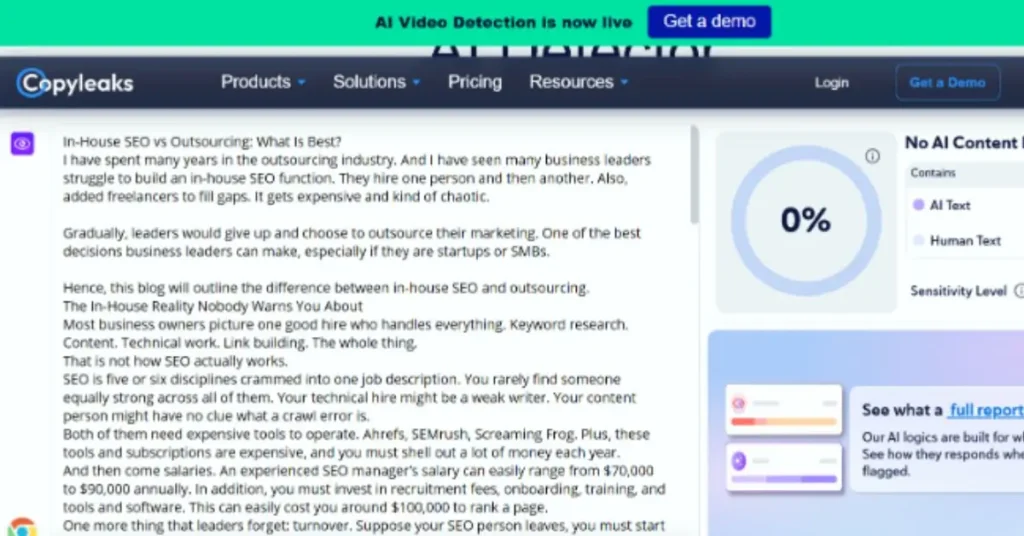
I have spent many years in the outsourcing industry. And I have seen many business leaders struggle to build an in-house SEO function. They hire one person and then another. Also, added freelancers to fill gaps. It gets expensive and kind of chaotic.
Gradually, leaders would give up and choose to outsource their marketing. One of the best decisions business leaders can make, especially if they are startups or SMBs.
Hence, this blog will outline the difference between in-house SEO and outsourcing.
The In-House Reality Nobody Warns You About
Most business owners picture one good hire who handles everything. Keyword research. Content. Technical work. Link building. The whole thing.
That is not how SEO actually works.
SEO is five or six disciplines crammed into one job description. You rarely find someone equally strong across all of them. Your technical hire might be a weak writer. Your content person might have no clue what a crawl error is.
Both of them need expensive tools to operate. Ahrefs, SEMrush, Screaming Frog. Plus, these tools and subscriptions are expensive, and you must shell out a lot of money each year.
And then come salaries. An experienced SEO manager’s salary can easily range from $70,000 to $90,000 annually. In addition, you must invest in recruitment fees, onboarding, training, and tools and software. This can easily cost you around $100,000 to rank a page.
One more thing that leaders forget: turnover. Suppose your SEO person leaves, you must start all over. With their exit, the institutional knowledge leaves as well. Now, that is a high cost that never shows up on the budget.
These damages are ok for large companies. But for a growing company, this can really hurt its budget and growth.
What Are the Benefits of Digital Marketing Outsourcing?
A good digital marketing services company does not just take work off your plate. It gives you a whole team.
A strategist, a technical person, a content writer, and a link builder, all already set up and running. You are not hiring anyone. Not training anyone. Not buying software.
Because agencies work across many industries, they bring perspectives that an internal hire simply cannot match. They have seen what works in B2B, ecommerce, services, and healthcare. That cross-sector knowledge translates into your account in genuinely useful ways. It is the kind of insight you cannot get from someone who works only at one company.
A mid-level agency retainer runs $2,000 to $5,000 a month. That is $24,000 to $60,000 per year. You can compare that to $100,000 or more for in-house, and the gap is massive.
According to reports, outsourcing can help you reduce operational costs by upto 30%. And I have personally seen clients reducing operational costs by up to 70%
In-House SEO vs Outsourcing: What’s Faster?
In-house teams are generally slow. Not because the people lack skills, but because that is how internal teams work.
Approvals take time. Other departments compete for the writer. Priorities shift. A blog that should take two weeks takes six. Every delay is a week of organic traffic you never got. Slow content calendars are a silent SEO killer.
Agencies move faster because delivery is literally what they sell. Slow agencies lose clients. So they stay sharp and keep things moving.
But when you partner with outsourcing companies like BolsterBiz, for example, the pace difference is evident. Deliverables will land on the schedule. Reporting is clear, with no need to chase people down for updates.
Also, when comparing SEO in-house vs outsourcing, one thing is important: consistency. With outsourcing, you get consistent execution month after month, which is what actually builds rankings. Speed matters more than most people admit.
When In-House Marketing Actually Makes Sense
To be fair, in-house is not always the wrong call.
Large companies with complex websites, strict compliance requirements, or industries where legal reviews of every piece of content are often needed internally. That person knows your brand cold. They can sit next to your legal team and get things done quickly.
Healthcare, finance, and legal services. These industries often need that level of control.
For bigger businesses with serious marketing budgets, a hybrid model works well. One internal person owns the strategy and manages the agency relationship. The agency handles execution. You get brand control without losing capacity. More than half of large enterprise brands outsource their SEO in some form, which suggests even companies with full marketing departments see the value of outside help.
What to Look For in a Digital Marketing Agency
Not every agency is worth your money. Some pitch extremely well and deliver slowly.
Ask for transparent reporting. You need to know what they did, what moved, and why. Not just traffic graphs. If they cannot explain their work in plain language, move on.
Ask how they handle technical SEO. A serious team can walk you through their process clearly. Vague answers are a red flag.
Ask for honest timelines. Real SEO takes three to six months before meaningful movement happens. Anyone promising page-one rankings in thirty days is either lying or using shortcuts that will eventually damage your site.
Check how they connect content and link building. These need to work together. Content that earns links naturally is what drives rankings over the long term.
A Quick Note on Pricing
Entry-level freelancers charge $500 to $1,500 a month. Fine for basic work, limited in scope.
Mid-tier agencies run $2,000 to $5,000 a month. This typically covers keyword research, content, technical audits, and some link building. Right range for most growing businesses.
Premium agencies go $5,000 to $20,000 or more. Only worth it if your site and competitive landscape genuinely require it.
Match the tier to your actual needs. Overpaying wastes money. Underpaying and expecting serious results wastes time.
The Bottom Line
Most growing businesses are better off outsourcing SEO, especially early on.
You get more expertise, faster execution, and lower costs than building a team from scratch. The organic traffic you build also compounds over time. You scale without job postings. And if someone at the agency leaves, that is their problem, not yours.
Building in-house sounds like the mature, responsible move. For most businesses, it is just the expensive one.
If you are not sure where to start, get a basic SEO audit first. Know what is working, what is broken, and where the biggest gaps are. Then decide who does the work to fix it.
That order makes a lot more sense than picking a model before you understand what you are actually dealing with.